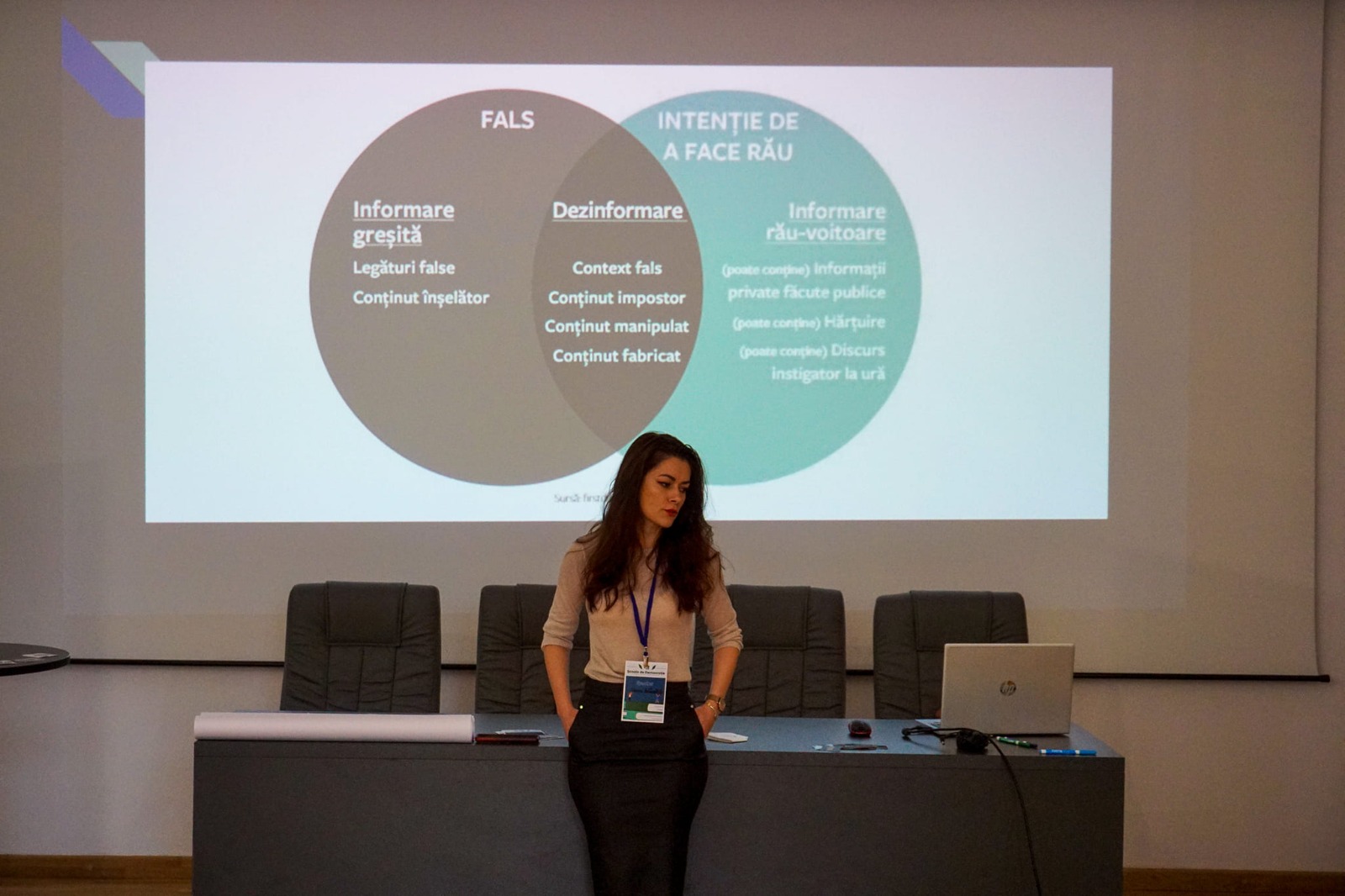
Bianca Adăscăliței
Clinical Psychologist & Systemic Psychotherapist
Hello! I am Bianca, a clinical psychologist and systemic psychotherapist based in Iași, and I am glad you are here. I strongly believe that each of us carries the necessary resources to overcome difficult moments, but sometimes we need a safe environment and an objective perspective to access them.
My therapeutic practice is based on the idea that true healing happens through authentic connection. Whether we are dealing with anxiety, depression, trauma, or profound relationship crises, I guide my clients to rediscover their inner emotional balance.
My Story and Professional Journey
The decision to become a psychologist was not a coincidence, but a calling born out of a profound desire to understand human complexity. I have always been fascinated by how relationships shape our identity and the impact that past experiences have on our present.
Throughout my years of clinical practice and training, I have learned that psychological suffering is not a weakness, but a signal that something in our internal or relational ecosystem needs attention and adjustment. As a therapist, my goal is not to offer 'magic' advice, but to facilitate a process of discovery and transformation.
I have worked with hundreds of individuals, couples, and families, each story being a lesson about resilience and the adaptive power of the human spirit. In my office in Iași, or during online sessions, I witness the extraordinary capacity of people to heal and rebuild their lives.
The Systemic Therapeutic Approach
As a psychotherapist trained in systemic couple and family therapy, I approach problems not just from the perspective of the isolated individual, but through the lens of the relationships and contexts in which they live.
What exactly does systemic psychotherapy mean? It means that symptoms (such as anxiety, depression, conflicts, panic attacks) are often the result of imbalances in the systems we are part of: our family of origin, our couple, or our professional environment.
My role is to act as a mirror that reflects the harmful patterns of communication or behavior you are caught in, and to help you slowly replace them with conscious, functional mechanisms. We explore family myths, the roles you have unconsciously assumed, and the invisible loyalties that dictate your choices.
My Working Philosophy
"You cannot take a client further than you have gone yourself as a person and as a therapist. Authenticity is the core of my work; I aim to create a therapeutic space where you feel seen, heard, and unconditionally accepted exactly as you are."
In therapy, there are no mistakes, only survival mechanisms that you once learned and which have now become dysfunctional. Through compassionate understanding, we can unlock these patterns. Knowing yourself is the most courageous endeavor you can undertake.
The Psychotraumatological Approach
In my practice, psychotraumatology plays an essential role in understanding how difficult or overwhelming experiences influence our emotions, relationships, and the way we relate to ourselves. Trauma does not only arise from extreme events — it can also take the form of repeated emotional wounds, neglect, rejection, or the absence of relational safety.
From a psychotraumatological perspective, many of the reactions we consider "problems" — anxiety, hypervigilance, relational difficulties, emotional blocks, or the persistent feeling of inner emptiness — are in fact adaptation mechanisms developed for survival.
My role is to help you understand these mechanisms without judgment, to identify together the roots of traumatic experiences, and to gradually build a safer and more stable inner space. The therapeutic process focuses on emotional regulation, reconnection with your own body, and the recovery of a sense of safety in your relationship with yourself and others.
How a Therapy Session Unfolds
Stepping into a psychology office can be intimidating for the first time. That is why I place a special emphasis on building a therapeutic alliance based on empathy, respect, and absolute safety.
In a typical psychotherapy session, I invite you into a space of non-judgmental exploration. In the initial meetings (the clinical assessment phase), we will discuss the reasons that brought you to therapy, your life history, and the goals you want to achieve. Then, we will collaborate to understand emotions, develop healthy coping strategies, and rebuild a harmonious relationship with yourself and those around you.
I use scientifically validated techniques, integrating elements from psychotraumatology and other evidence-based approaches. Confidentiality is strictly guaranteed by the ethical code of the College of Psychologists of Romania.
Education and Accreditations
My professional development is a continuous process. Here are the main pillars of my academic and clinical training:
Bachelor in Psychology
Alexandru Ioan Cuza University, Iași
Consolidated my theoretical foundation in general and experimental psychology.
Master's Degree
Clinical Psychology and Psychotherapy
Deepened diagnostic and clinical intervention techniques.
Systemic Therapy Certification
Couple and Family Psychotherapist
My core training allowing me to work dynamically with family systems and couples.
Psychotraumatology
Institute for the Study and Treatment of Trauma, Bucharest
Specialization to address deep, unresolved traumas safely.
COPSI
Certified by The College of Psychologists of Romania
Frequently Asked Questions
Clear answers about the therapeutic process.
What is the difference between a psychologist, a psychotherapist, and a psychiatrist?
A clinical psychologist deals with the assessment and diagnosis of psychological difficulties. A psychotherapist (like myself) has several years of additional training that allows them to treat these difficulties through talk therapy. A psychiatrist is a medical doctor who can prescribe medication. Often, collaboration between a psychotherapist and a psychiatrist yields the best results.
How long does a session last, and how many sessions will I need?
An individual psychotherapy session lasts 50 minutes, while couple or family therapy can extend to 60-90 minutes. The number of sessions varies massively depending on the complexity of the issue. Short-term interventions can last between 8-12 sessions, while working on deep traumas requires long-term commitment.
Can I do psychotherapy online?
Absolutely. I offer online psychological counseling and psychotherapy sessions for Romanians everywhere (in the country and in the diaspora). Online therapy has proven its effectiveness, being just as effective as in-person therapy at my office in Iași.
How do I know if systemic therapy is right for me?
Systemic therapy is suitable if you feel that your difficulties are related to others (couple problems, toxic relationships, conflicts) or if you inexplicably repeat certain mistakes. Even in individual therapy, we work by taking your relational 'system' into account. This helps resolve anxiety, depression, and addictions.
Beyond the Profession
I strongly believe that hobbies are not a luxury, but a deeply human need. They are the spaces where a person stops functioning on autopilot and truly begins to live. In a world that constantly teaches us to perform, produce, and endure, passions are what bring us back to ourselves.
For me, each hobby has been more than a recreational activity. It has been a form of reconnection — with nature, with my body, with the present, with stillness, with life itself.
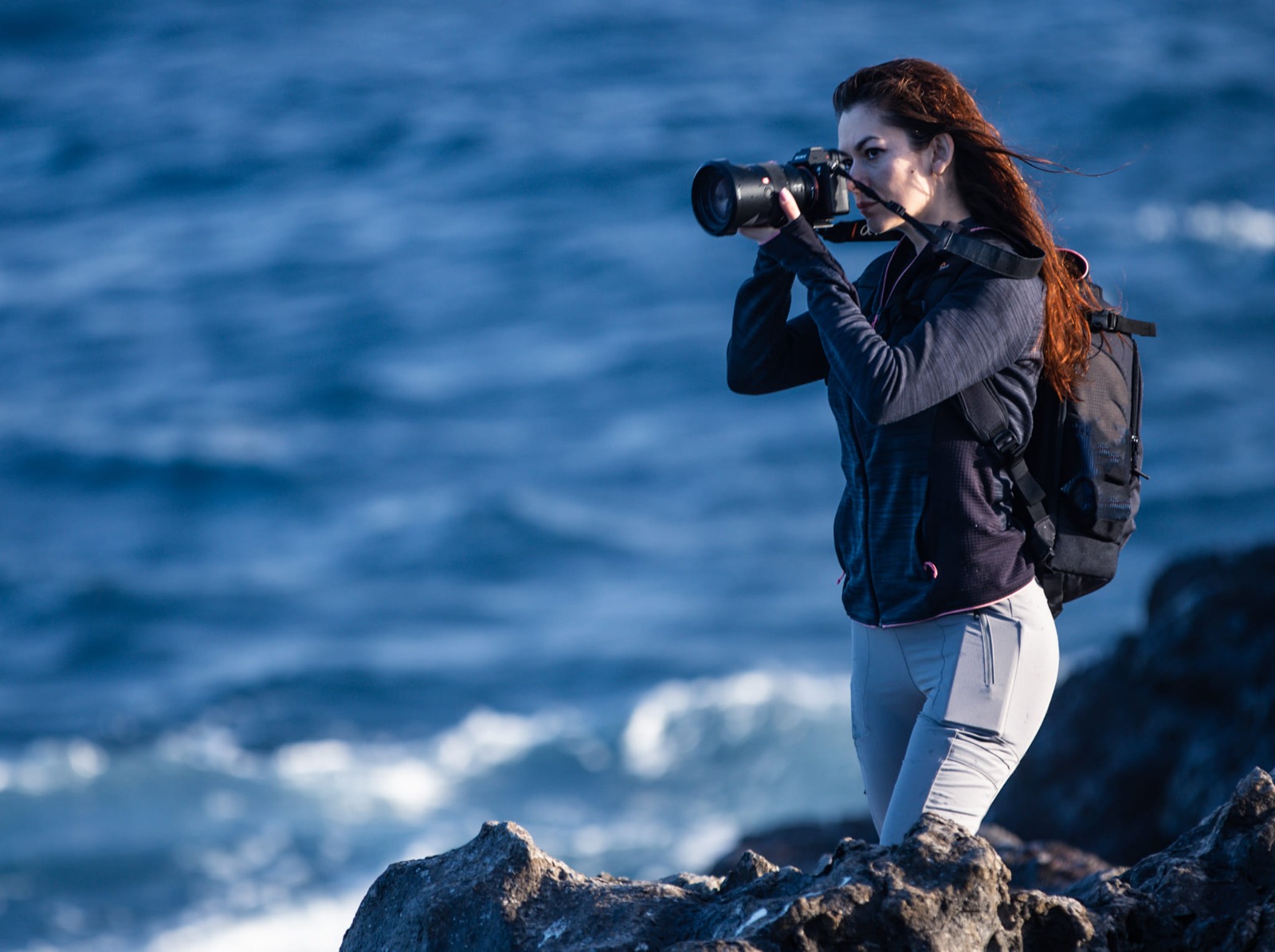
Photography — First Encounter with Stillness
Photography was my gateway to a world I had never truly known: the world of presence. Before that, I lived in the constant noise of my thoughts — a mind always busy, always on alert, always caught somewhere between past and future. Some thoughts made sense. Many did not. Then photography appeared.
For the first time, I experienced that rare state where everything stops for a few seconds. In front of a landscape, a perfect light, or a frame that asked to be captured, my mind went quiet. There was no inner restlessness. There was only that moment. Photography taught me to observe. To slow down. To truly look.
Through landscape photography, I reconnected with nature — a space that, without realizing it for a long time, had been my refuge since childhood. Nature was my first safe place, and photography helped me return there.
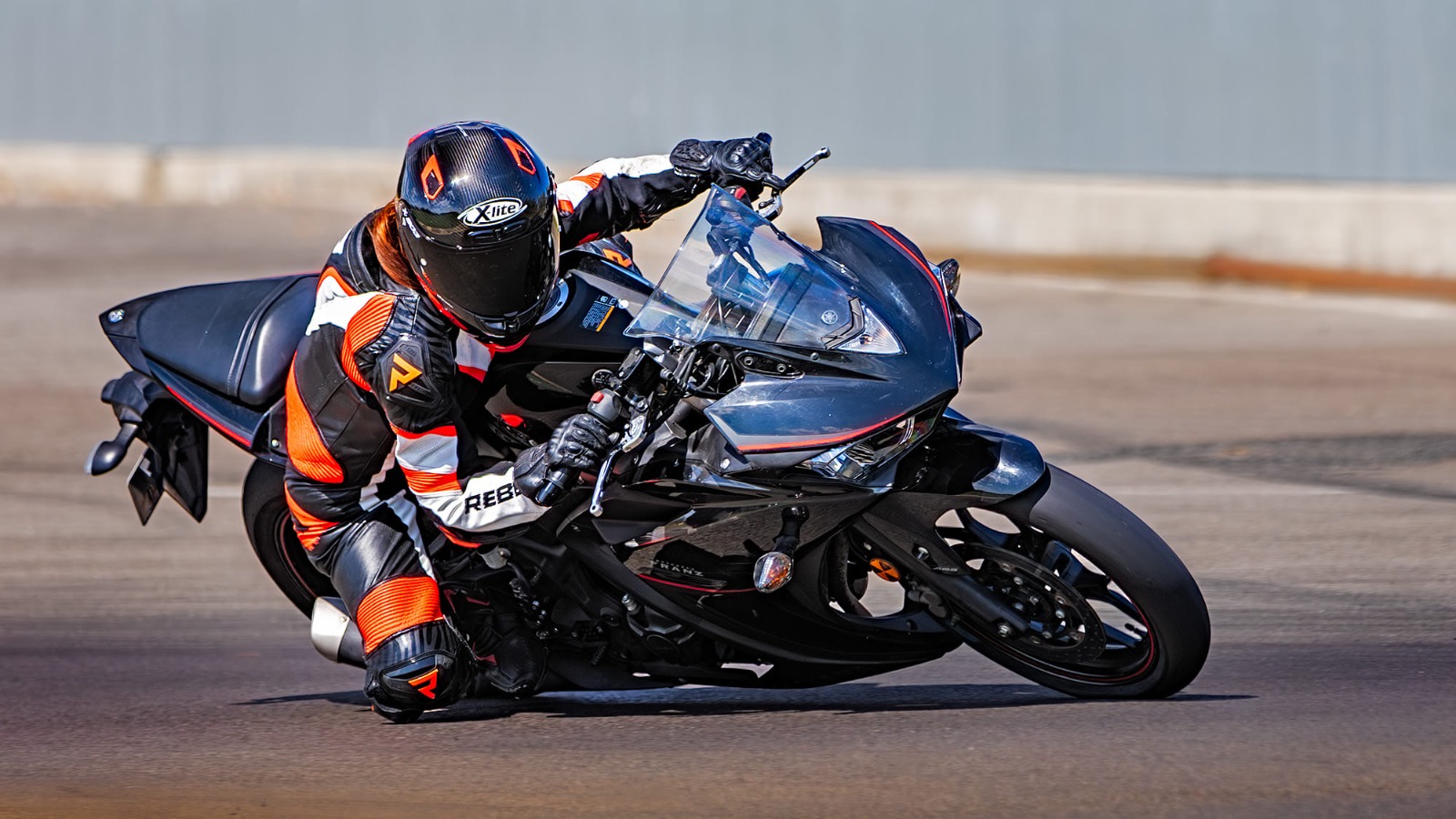
Motorcycling — The Dialogue Between Mind and Body
After photography, motorcycling entered my life. And with it, a new form of presence. If photography taught me the quiet of the mind, motorcycling taught me the relationship with the body. Here, every movement matters. Every reaction has meaning. Body and mind must communicate constantly, and emotions can no longer be ignored or postponed.
For me, motorcycling is like a dance — and its beauty lies in the fact that it can be experienced in multiple rhythms. Road motorcycling is the relaxed, everyday side — a blend of R&B and pop, fluid and familiar. Track motorcycling resembles ballet: precision, discipline, control, and elegance in motion. And off-road… off-road is a true Moldovan folk dance — unpredictable, intense, full of life and challenges.
Each of these forms challenges me differently and offers a different kind of joy. But they all have one thing in common: they force me to be fully present. There is no room for useless mental noise. There is only the body, the breath, the emotion, and the moment.


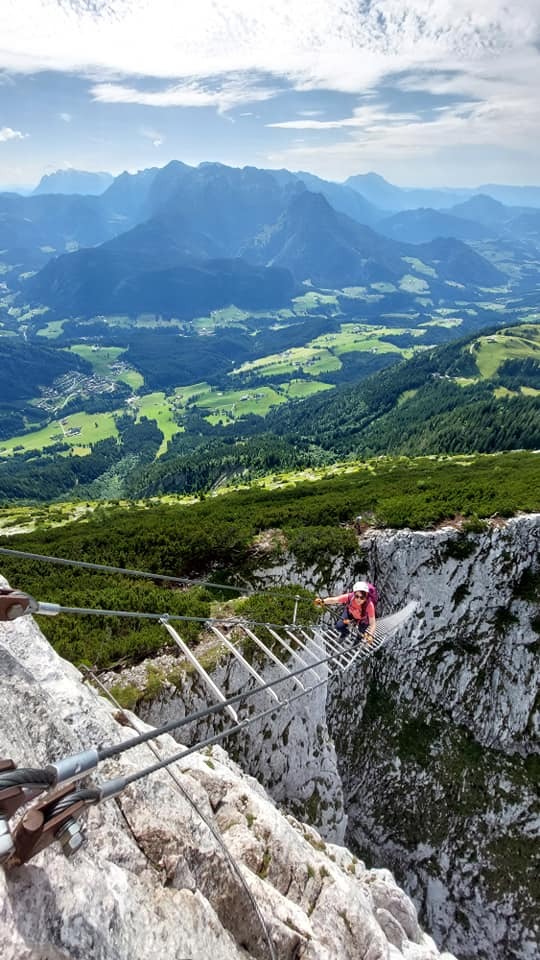
Via Ferrata — The Mysterious Conversation with Instinct
Via ferrata is, for me, still an unfinished story. A chapter where I sense there are answers I have yet to discover.
Climbing comes naturally to me — being at dizzying heights, trusting my body in situations where, theoretically, there should be more fear. And yet, I have never had thorough training for it. I often wonder: how does my body know how to do all these things? How can such deep intelligence exist within us, without having been explicitly taught?
Via ferrata made me understand that sometimes the body carries memories and resources that the mind cannot yet explain. And perhaps not all answers need to be found immediately. Sometimes, it is enough to remain curious.
Curiosity — The Engine of Life
If there is one common thread running through all my passions, it is curiosity. Curiosity pulls us out of inertia. It pushes us to explore, learn, feel, make mistakes, and discover. It is the opposite of stagnation and the antidote to automatic survival.
I believe a person truly begins to live when they allow themselves to be curious — about themselves, about the world, about what exists beyond fear, routine, or the limits they have imposed on themselves. Life has far more layers than those we see when we are merely trying to "get through it." And sometimes, a simple passion can become the beginning of a profound reconnection with yourself.
Be curious. About life. About your body. About your emotions. About what makes you feel alive.