"Perhaps freedom doesn't mean the absence of fear, but the ability to keep choosing your path even when fear is present."
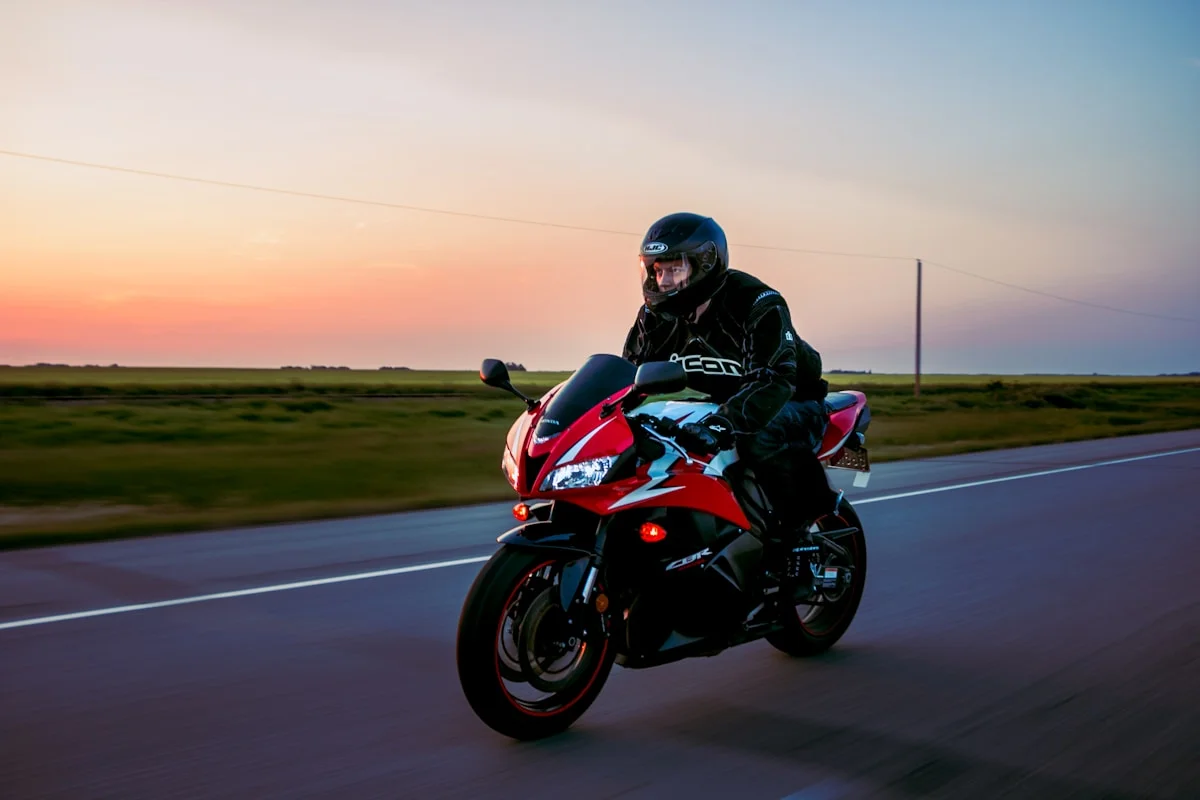
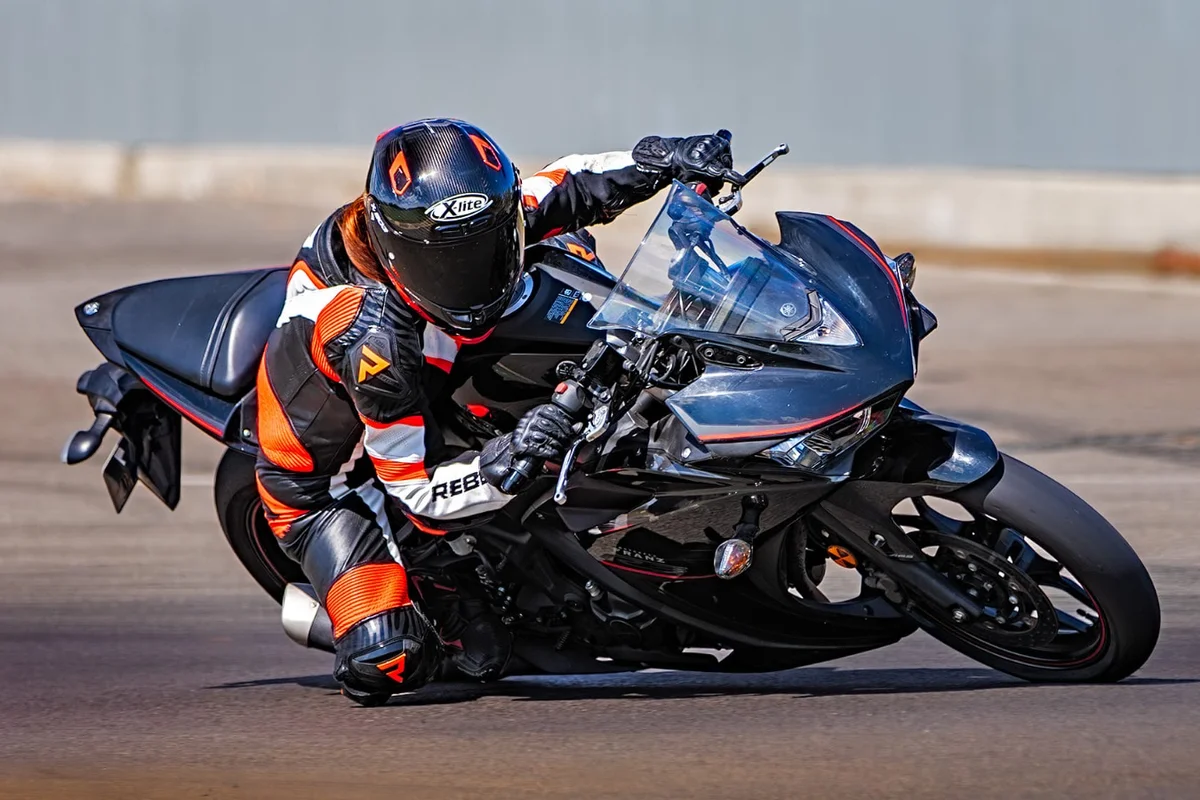
Riding a motorcycle is often perceived as a form of absolute freedom, a fluid dance between rider and machine, where the asphalt becomes an extension of one's own will. But for anyone who has ever felt their heart pound right before entering a technical corner, the reality is far more nuanced. There are moments when, even though you know exactly how to position your body and where to look, you feel an invisible resistance. The bike seems to stop listening to you, and your mind turns into overwhelming white noise.
Although this phenomenon shows up frequently on a motorcycle, it reflects, in condensed form, how people react to fear in everyday life. Whether we're talking about a difficult conversation, a career change, a relational conflict, or an important decision, our nervous system often responds by the same rules: seek safety, avoid danger, and try to protect us.
This experience, which we casually call "losing focus," is, in essence, a fascinating psychological phenomenon. It's the point where your body tries to protect you from a perceived danger, turning an experience of pleasure into one of survival.
The Anatomy of a Freeze: When Fear Takes the Handlebars
When we're on a motorcycle, our nervous system is in a state of constant alertness. That's what keeps us safe. However, there is a major difference between the vigilance safety requires and the panic that paralyzes movement. In psychology, we often observe how the human brain, especially under pressure, tends to "fixate" on the source of fear. On the road, this is called target fixation: your gaze locks onto the very obstacle you're desperate to avoid — the guardrail at the edge of the road, an oil patch, sand, gravel, or a vehicle that braked suddenly.
This fixation is not a technique failure, but a protective reaction of your limbic system, the part of the brain responsible for survival. Under stress, your emotional brain "borrows" the resources of your rational brain, the prefrontal cortex. In practice, you become the victim of your own defense system. Your shoulders tense, your arms stiffen, and the mobility needed to lean the bike disappears.
It's a perfect metaphor for everyday life: the more we fear a situation — whether it's a new responsibility at work, an unresolved conflict, or an important decision — the stiffer we become, the less able we are to "corner" gracefully through that experience.
From the perspective of psychotraumatology, these reactions take on an even deeper meaning. When our nervous system perceives a danger — real or merely anticipated — it can drop out of what specialists call the "window of tolerance," that inner space where we have simultaneous access to emotion, clear thinking, and behavioral flexibility. Outside this window, the body activates its ancestral survival modes: fight, flight, freeze, or fawn. From this perspective, what we often interpret as lack of willpower, weakness, or inability to control ourselves may actually be the expression of a nervous system trying, through the means it knows, to keep us safe.

Fear Is Not the Enemy, It's a Messenger
A common mistake we make, both in personal life and on a motorcycle, is trying to suppress fear. We try to "not be afraid," to ignore the signals our body sends us. But if we look at fear not as an enemy to be defeated, but as a messenger bringing us information about the environment we're in, the perspective changes radically.
Within the context of a personal history, the fear we feel in the present is sometimes not tied only to the immediate event, but is the echo of past experiences in which we felt vulnerable. Our nervous system "retains" these imprints. When you enter a corner and feel that wave of panic, your whole system may unconsciously be reviving an old state of alertness.
In our relationships, this phenomenon can take different forms. Sometimes we fixate so intensely on what we're afraid of losing — closeness with the other person, the security of the relationship, or the approval of those around us — that we end up behaving in exactly the ways that push us further from what we want. The person who fears abandonment may become excessively vigilant. The one who fears rejection may avoid closeness. And the one who fears failure may give up before even trying.
In many ways, life works by the same rule as a motorcycle: the more intensely we stare at the wall we're afraid of, the greater the risk of heading straight for it.
Understanding that these reactions are your psyche's attempts to keep you safe is the first step toward transforming them. You are not "broken" for feeling fear; you are a person whose protective mechanism is working. The problem only arises when this mechanism becomes hyperactive, preventing you from living the experience to its full potential.
Regulation Techniques: How to Take Back Control
Learning to listen to the signal of fear without letting it take over the "handlebars" is a process of regulation. We're not aiming to eliminate emotions, but to cultivate the capacity to navigate through them with presence.
1. Somatic Reframing: Listening to the Body
On a motorcycle, the first sign of a freeze is tension in the shoulders and jaw. In everyday life, it's the knot in your stomach or the feeling that you can't breathe deeply.
Technique: Notice whether your shoulders have crept up toward your ears, whether your jaw is clenched, or whether your hands are gripping the handlebars too hard. Consciously relax these areas and let your body settle more naturally into the motion. Sometimes, just a few percent of relaxation in the body can radically change how the bike responds. More often than not, the bike starts "flowing" again exactly the moment the body stops fighting fear and regains the flexibility it needs to adapt to the road.
2. Breath as an Anchor: Regulating the Nervous System
Breathing is the only vital function that can be controlled both consciously and unconsciously. It's our bridge to the autonomic nervous system.
Technique: When you enter a corner or a stressful situation, the extended exhale is key. Inhale for a count of 4 and exhale for a count of 6 or 8. The long exhale activates the nervous system branch responsible for relaxation — the part of us that slows the heart rate and reduces muscle tension. On a motorcycle, that means not holding your breath, but letting it flow with the movement.
3. Shifting Focus: The Look-Where-You-Want-to-Go Technique
Perhaps the most important one: if you look at the wall, you'll go into the wall. In psychology, this is called "goal orientation."
Technique: No matter how much a situation scares you, actively look for the "way out." Where do you want to end up? What is the point of safety? This technique doesn't mean denying the danger, but prioritizing the solution. Train your mind to identify the resources you already have, instead of focusing exclusively on catastrophic scenarios.
Psychological Flexibility: The Art of Staying Present
Just like in a corner, psychological health doesn't mean the absence of fear, but the ability to stay flexible in its presence. It's not rigidity that keeps us safe, but the ability to adjust direction when the road changes.
Psychological flexibility means being able to feel difficult emotions without becoming completely controlled by them, and choosing actions that align with our values, even when discomfort is present. In this sense, courage is not the absence of fear, but the capacity to move forward in spite of it.
You can be scared and, at the same time, competent. You can feel anxiety in your chest and still make the right call, holding the ideal line. This "self-mastery" — the ability to stay present even when your instincts whisper for you to retreat — is perhaps one of the most valuable skills we can develop, both on a motorcycle and off it.
Integration: From the Corner to Life
When you learn to manage fear on a motorcycle, you're actually learning to manage your own nervous system. This is not just a technical skill, but a form of self-transcendence and self-knowledge.
The corners of our lives — whether we're talking about career decisions, relational crises, or moments of personal uncertainty — are often far more complex than the ones on asphalt. Sometimes, though, it's precisely their complexity that makes us lose our bearings. Understanding why certain situations block us, why certain fears become paralyzing, or why we react disproportionately to everyday challenges is a process of mapping our own history.
Not being afraid doesn't mean being immune to fear or possessing some secret manual for completely avoiding uncertainty. On the contrary, finding balance means learning to sit with those fears "at the table," to understand their language, and, most importantly, to stop letting them take control in your place.
Fear has its own rhythm and its own logic, often anchored in experiences we've learned to keep at a distance. But once we start seeing these freezes not as failures, but as signals, we can begin to recalibrate how we relate to ourselves and to those around us.
Learning to turn fear from an "obstacle" into an "indicator" is an ongoing exercise in presence. Whether you're on two wheels or in the middle of a demanding day, the ability to regulate your emotions doesn't just give you safety — it gives you back the freedom to choose your direction.
Perhaps freedom doesn't mean the absence of fear, but the ability to keep choosing your path even when fear is present. And the road toward a more solid inner balance always begins with the courageous observation of what's happening beneath the surface, without rushing to change everything overnight, but with the patience a lasting change requires.
Ultimately, every corner in which you manage to stay present is proof that you're in control, and the clarity gained in difficult moments is what will let you move forward, with more confidence, from here on.
If you recognize these patterns of freezing and want to learn to consciously regulate your response to fear, personal development sessions or online psychologist support can be a first step toward regaining flexibility and confidence in yourself.
Key Takeaways
- "Target fixation" freezing is not a technique failure, but a protective reaction of the limbic system, the part of the brain responsible for survival.
- The more intensely you fixate on what scares you, the greater the risk of heading straight for it — true on a motorcycle and in life alike.
- Fear shouldn't be suppressed, but listened to as a messenger carrying information about your need for safety and your personal history.
- Somatic reframing, extended-exhale breathing, and redirecting your gaze toward the "way out" are concrete techniques for regulating the nervous system.
- Psychological flexibility — not the absence of fear — is what lets you act in line with your values even in the presence of discomfort.